Sound Stories
Sound Stories: Claudia Casasola
10 March 2026
A conversation with Forever Audio Sound Engineer Claudia Casasola about immersive audio and building worlds through sound.
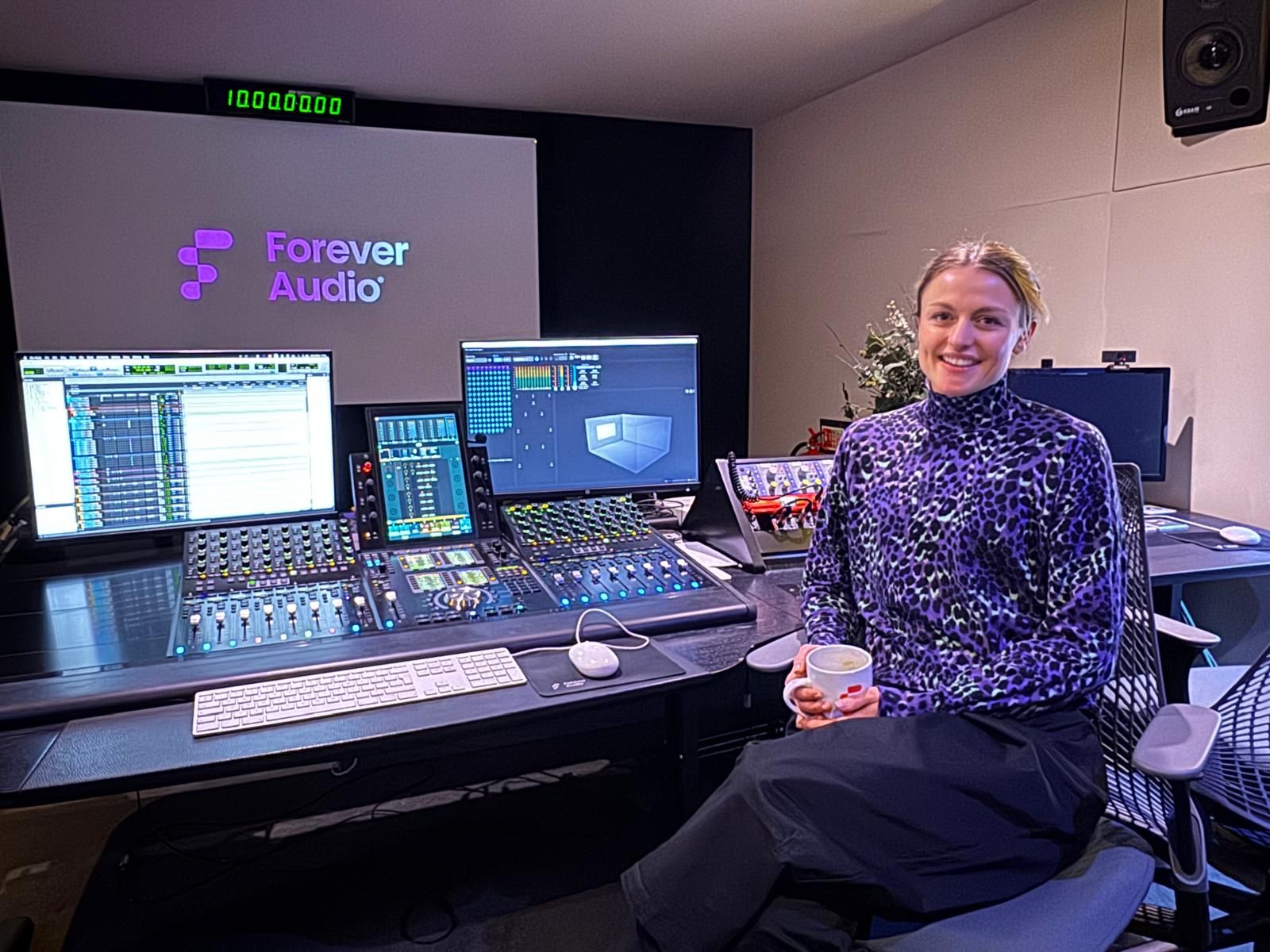
Did you always know you wanted to work in audio, or did you discover it along the way?
I come from a Fine Art background where I often used audio in my installation work, exploring how sound interacts with space and image. That early experimentation sparked a deeper interest in how sound shapes perception.
Later, I started working on sound for short films, where I developed a more focused and technical understanding of audio within a narrative context. From there, the move into post production felt like a natural step.
What was your first role in the industry and what did it teach you?
My first role in the industry was as an Audio Assistant at an animation focused studio. I supported dialogue editing and voice records, and spent a significant amount of time developing stylised Foley techniques to match the visual language of different projects.
I was also involved in sound design, helping to build entire worlds from scratch. That experience gave me a strong understanding of the animation audio post-production workflow. Just as importantly, it taught me the value of collaboration. In a small, tight-knit team, roles often overlap so you learn quickly to be adaptable, proactive, and comfortable taking on multiple responsibilities to deliver a project successfully.
Looking back over the last 7 or 8 years, what are you most proud of?
I’m most proud of contributing to award-winning productions alongside incredibly talented colleagues.
I’ve had the opportunity to record esteemed figures such as Sir David Attenborough, which was undoubtedly a career highlight. I’m also particularly proud of leading Foley for the animated series Dead End: Paranormal Park. It pushed me creatively, but also helped me develop my project management skills and ability to deliver consistently high quality work.
Do you feel representation in the industry is changing?
I’ve been lucky to work with really supportive colleagues who respected what I bring to the table and helped me grow. I’ve especially enjoyed being on balanced teams, where different perspectives naturally make the work stronger.
There have been times where I felt I had to prove myself to clients who weren’t used to working with a female engineer. But honestly, those moments pushed me to back myself more and build confidence in my abilities.
I think representation is getting better and more visible than when I first started. There’s more awareness and open conversation around inclusion, which is a positive shift. That said, progress still feels slow at times, especially in more senior and technical roles, so there’s still more to be done.
Have you had any role models or mentors who shaped your path?
Absolutely! I’m incredibly grateful to the colleagues who took the time to show me the ropes and generously share their knowledge. Their creativity, talent, and work ethic have continually inspired me to raise my own standards. In this industry, every day feels like a learning opportunity, and there’s always a new technique to explore or a better way to approach a challenge. Exchanging ideas, trading tips and collaborating with other engineers has been fundamental to my growth, and it’s something I value deeply.
What advice would you give to young women who are curious about a career in sound but aren’t sure where to start?
I’d say the best place to start is by exploring and experimenting. Don’t be afraid to try out different areas of sound, whether that’s recording, Foley, sound design or editing. Look for opportunities to learn, like workshops, online tutorials or internships.
Try to connect with people already working in the industry. Finding mentors, asking questions and being curious goes a long way. Most importantly, trust yourself. If you enjoy it and are willing to put in the work, there’s absolutely a place for you in sound.
What’s a recent project that challenged you creatively?
Mixing the full-cast Harry Potter audiobook in Dolby Atmos has definitely been a career highlight. It’s such an epic production, and translating that scale into an immersive Atmos mix meant balancing multiple layers; dialogue, intricate Foley, detailed sound design, and music, all within an immersive space.
Working without picture gives you creative freedom, but it also presents a unique challenge: everything has to be clear, intentional and supportive of the narrative so the listener can follow the story purely through sound. It really pushed me to think spatially and narratively at the same time.
What excites you about the future of audio?
It’s an exciting time technically, especially with AI driven tools evolving so quickly.
Advances in dialogue restoration/cleanup, as well as intelligent session management are making workflows more efficient and reducing time spent on repetitive tasks. As long as creativity and human instinct continue to lead the process, I believe these advancements can elevate what we’re capable of as sound professionals.